Ask someone to describe a room they loved and they will rarely mention the lighting. They will talk about how the room felt. Calm. Warm. Special. They remember a mood, an atmosphere, a sense of the place that has stayed with them. What they almost never say is "the ambient illumination was beautifully diffused." They felt the light. They credited the room.
This is the quiet truth at the heart of great lighting design. The best lighting is not noticed. It is remembered, but only as a feeling. And that feeling becomes attached to the space, to the experience, and to the person who created it.
Memory keeps the feeling, not the fixture
Human memory is not a catalog of details. It is a keeper of impressions. People forget the specifics of a room quickly: the paint color, the furniture layout, the fixtures. What lasts is the emotional residue, the sense of how the space made them feel. A room that felt warm and calm is remembered as warm and calm, long after every specific detail has faded.
from a space
almost immediately
for the feeling
Light is the most powerful driver of that feeling, and the least likely to be consciously noticed. It sets the emotional temperature of a room before anyone has registered a single design decision. And because it works below the level of conscious attention, it never gets the direct credit. The client does not thank you for the lighting. They tell their friends the room is the most beautiful in the house.
The decisions clients never see
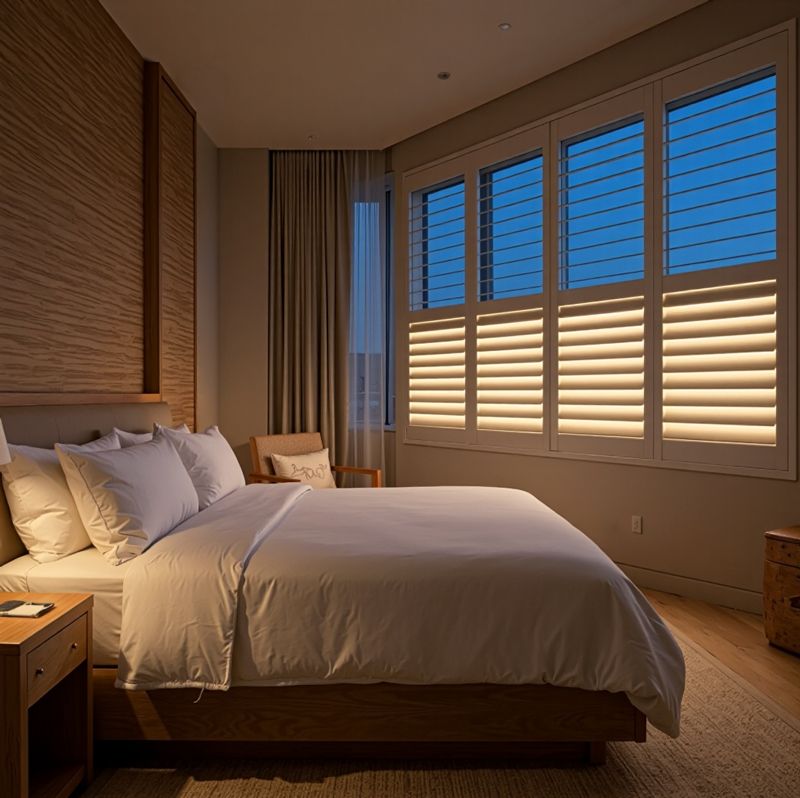
A great deal of what makes a room feel right is invisible to the person living in it. They do not see that the ambient light comes from the wall plane rather than the ceiling. They do not notice that the evening light warms and dims on a gentle curve. They do not register that there are no glaring sources, no hard shadows, no hotspots. They only know that the room feels good, and that they want to be in it.
This is the designer's real work. Not the visible flourishes, though those matter, but the invisible decisions that shape how a space feels to be inside. The lighting choices are among the most powerful of these, precisely because they operate beneath notice. Get them right, and the room has a quality the client cannot name but never forgets.
The paradox of great lighting
The better the lighting, the less likely anyone is to mention it. A glaring fixture gets noticed and complained about. A beautifully diffused ambient layer simply makes the room feel wonderful, and takes no credit for it. The designer's finest lighting work is often the work that disappears most completely into the experience. The reward is not recognition of the technique. It is a client who believes you are brilliant.
Feeling becomes reputation
Over a career, this is how a designer's reputation is built. Not through the features clients can list, but through the feelings they carry away. A client who spent evenings in a room that felt genuinely restful will remember that room for years. They will describe it to others in emotional terms. And when they or someone they know needs a designer, that feeling is what they will reach for. The lighting they never noticed becomes the referral you never had to ask for.
What people remember
Across this series, we have looked at light from many angles: the morning wake, the circadian arc, the evening wind-down, the calm of amber, the difficult window redeemed, the crowded ceiling simplified, the hospital room made humane. Different subjects, one thread running through all of them. In every case, the value of the light was not in what it looked like. It was in how it made people feel.
They remember the calm
The room that let them exhale. The evening that felt genuinely restful. The sense of a space that was on their side.
They remember the warmth
Not the color temperature in kelvin, but the feeling of warmth. The glow that made the room feel like a place they belonged.
They remember you
Because you gave them the feeling. The specification disappears. The experience stays. And the experience carries your name.
The light worth remembering
The goal was never to make light people notice. It was to make light people remember, in the only way light is ever really remembered: as the feeling of a room that was good to be in. That feeling is the most durable thing a designer can leave behind. It outlasts trends, finishes, and every visible detail. It is what people carry with them, and what they credit to the person who gave it to them.
Make the light that people remember. Not the fixture they can point to, but the feeling they cannot forget. That is the light worth designing, and the light worth building into every room you touch.
LiteLüvr® is a window-integrated lighting system by Radiant Blinds, LLC. To experience the light people remember, request a showing.