Anxiety is not a design brief. No client walks into a meeting and says "I need my living room to reduce my cortisol levels." But they do say things like "I want a room that feels calm." They say "I need a space where I can actually unwind." They describe rooms that feel tense without knowing why, and rooms that feel peaceful without being able to explain what makes them different.
Increasingly, the research points to one answer: the light.
What the UC Davis Color Lab found
In 2025, researchers at UC Davis established something that lighting designers have intuited for years but never had clinical data to support. The university's Color Lab, a collaboration between the California Lighting Technology Center and the Department of Psychology, ran controlled studies exposing participants to five different colors of ambient light after a standardized stress test. They monitored brainwaves via EEG, measured salivary cortisol levels, and collected self-reported assessments of stress and anxiety.
The results were clear and consistent.
stress reduction
from standard room light
vs. dim light conditions
Amber light produced the most rapid and substantial reduction in both physiological stress markers and subjective anxiety. Not red. Not blue. Not green. Amber. The other colors offered no measurable benefit over standard white light, and in some cases actually slowed stress recovery.
For designers, this finding is significant because it connects a specific quality of light to a measurable biological outcome. The warm, amber-toned light that feels calming in a well-designed room is not just aesthetically preferable. It is physiologically effective at reducing the stress hormone cortisol and supporting recovery from the accumulated tensions of the day.
The passive intervention
One detail from the UC Davis research deserves special attention. The researchers described their work as developing "passive interventions" for stress reduction. Unlike meditation, yoga, or breathing exercises, a lighting environment doesn't require the person to do anything. They don't need to participate. They don't need to be aware it's happening. The light does the work while the person simply exists in the space.
This is a powerful concept for designers. It means that a well-specified ambient layer isn't just a stylistic choice. It is, in a literal and measurable sense, a wellness intervention built into the architecture. The occupant doesn't need to learn a technique or follow a protocol. They just need to be in the room.
The designer's reframe
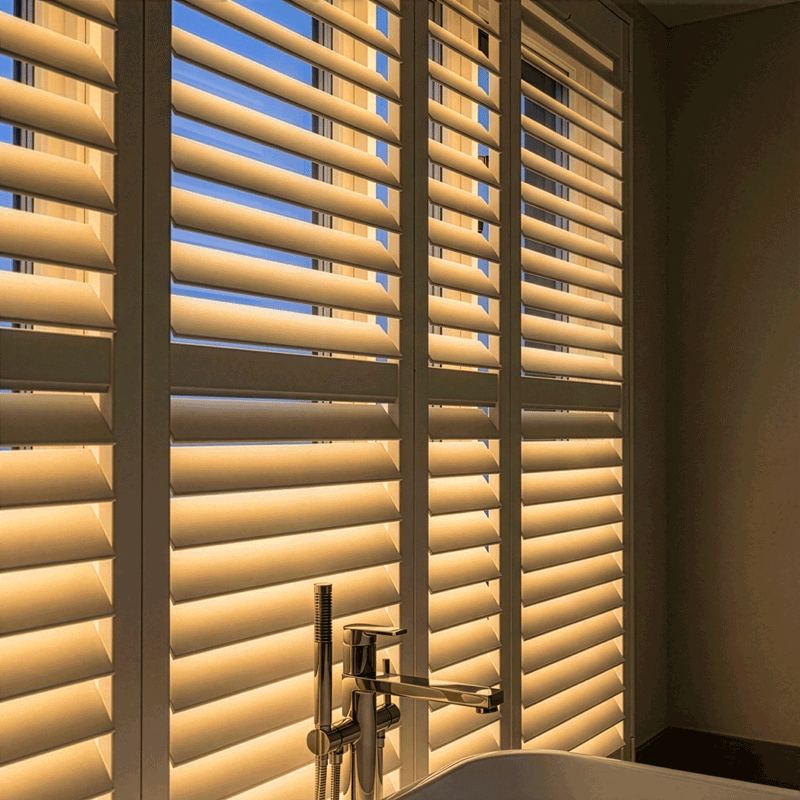
When a client says "I want a calm room," they're describing a feeling. When the research says "amber ambient light reduces cortisol," it's describing a mechanism. The designer's job is to connect the two: specify the light that produces the biology that creates the feeling. This is no longer intuition. It's evidence-based design.
Why most evening rooms work against the body
The same body of research reveals a troubling counterpoint. Standard room lighting, even at normal residential brightness levels, suppresses the body's melatonin production by over 70% in the hours before bedtime. Melatonin duration shortens by approximately 90 minutes compared to dim light conditions. The neurochemical environment that the body needs to wind down, rest, and recover is being disrupted every evening by the very lighting that is supposed to make the room comfortable.
The culprit is not brightness alone. It's the spectral quality. Cool-white and neutral-white light sources, including most standard LED downlights, emit enough blue-spectrum energy to signal the brain that it's still daytime. The circadian system responds accordingly: cortisol stays elevated, melatonin stays suppressed, and the nervous system remains in its alert, activated state.
This is the gap that warm amber light fills. By shifting the spectral output toward longer wavelengths and away from the blue band, the room's evening lighting stops fighting the body's natural wind-down and starts supporting it. The effect is not subtle. It's the difference between a room where the occupant feels "tired but wired" and a room where they feel genuinely ready to rest.
Three design moves that shift a room from anxious to calm
For lighting designers and interior designers working on residential wellness projects, the research suggests three specification-level decisions that make a measurable difference:
Move the ambient origin to the wall plane
Overhead light creates downward glare and harsh facial shadows that register as visual stress. Lateral, wall-plane light fills the room evenly and reduces the contrast ratios that put the visual system on alert.
Specify warm amber for evening layers
The UC Davis data is specific: amber outperforms every other color for stress reduction. In evening mode, the ambient layer should deliver warm, amber-toned light that supports melatonin production instead of suppressing it.
Design for transition, not switching
An abrupt shift from full brightness to darkness is a stress event for the nervous system. Gradual dimming over 20 to 30 minutes mirrors the body's natural wind-down and reinforces the circadian signal.
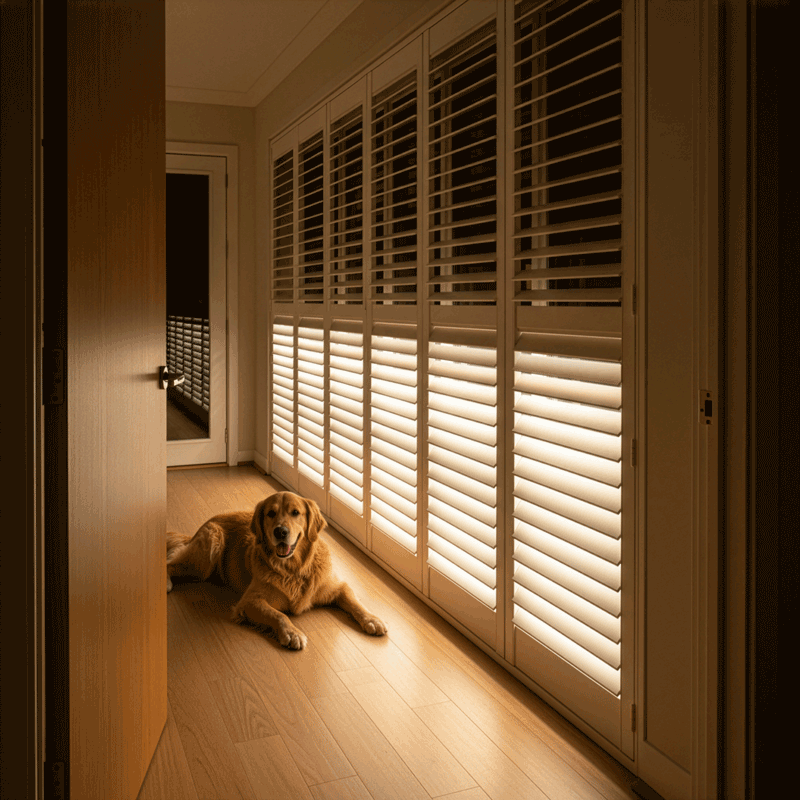
LiteLüvr was designed around all three of these principles. The light originates at the window (wall plane). It delivers warm white illumination that shifts toward amber at lower brightness levels. And the sunrise and sunset simulation provides the gradual transition that the nervous system responds to most effectively.
What this means for your practice
The next time a client describes wanting a "calm" space, you now have clinical language to back up your instincts. The warm amber glow you've always preferred for evening living spaces isn't just a taste decision. It's supported by EEG data, cortisol measurements, and controlled behavioral studies from a major research university.
That changes the conversation. It moves lighting from an aesthetic line item to a wellness specification. And it gives designers a credible, evidence-based reason to invest in the quality of the ambient layer rather than treating it as background filler for the decorative fixtures.
The rooms that reduce anxiety don't announce what they're doing. They simply feel different. The light is warm. The glow is even. The body responds before the mind catches up. And the person in the room attributes that feeling to the space itself, which means they attribute it to the designer who created it.
LiteLüvr® is a window-integrated lighting system by Radiant Blinds, LLC. To experience warm, amber-toned ambient light from the window plane, request a showing.