A hotel guest walks into a room for the first time and makes a judgment in about ten seconds. Not a conscious evaluation — something faster and more visceral. The room either feels right or it doesn't. The bedding, the furniture, the view — all of it registers. But research consistently shows that the single factor most responsible for that initial feeling is the quality of the light.
Not the quantity. Not the brightness. The quality — the warmth, the direction, the evenness, and the presence or absence of glare. Guests can't articulate this. They don't write "the vertical illumination was exceptional" on TripAdvisor. They write "the room felt incredibly relaxing." The lighting is the reason. The experience gets the credit.
What the research shows
Hospitality design research has increasingly focused on lighting as a measurable driver of guest satisfaction. The evidence points in one direction: guests consistently rate rooms as more restful, more premium, and more memorable when the ambient light is soft, diffused, and arrives from a lateral source rather than directly overhead.
as top satisfaction driver
receive higher ratings
its first impression
The IES Lighting Handbook recommends layered lighting with glare reduction for hospitality environments, while the WELL Building Standard promotes circadian-friendly strategies with adjustable color temperatures. In practice, the rooms that score highest on post-stay satisfaction surveys share a common trait: a warm ambient layer that fills the room from the walls, not from the ceiling.
The guest journey — lit from the window
Walk through a hospitality suite the way a guest would — from arrival to morning departure — and notice where the light matters most:
Arrival: the threshold moment
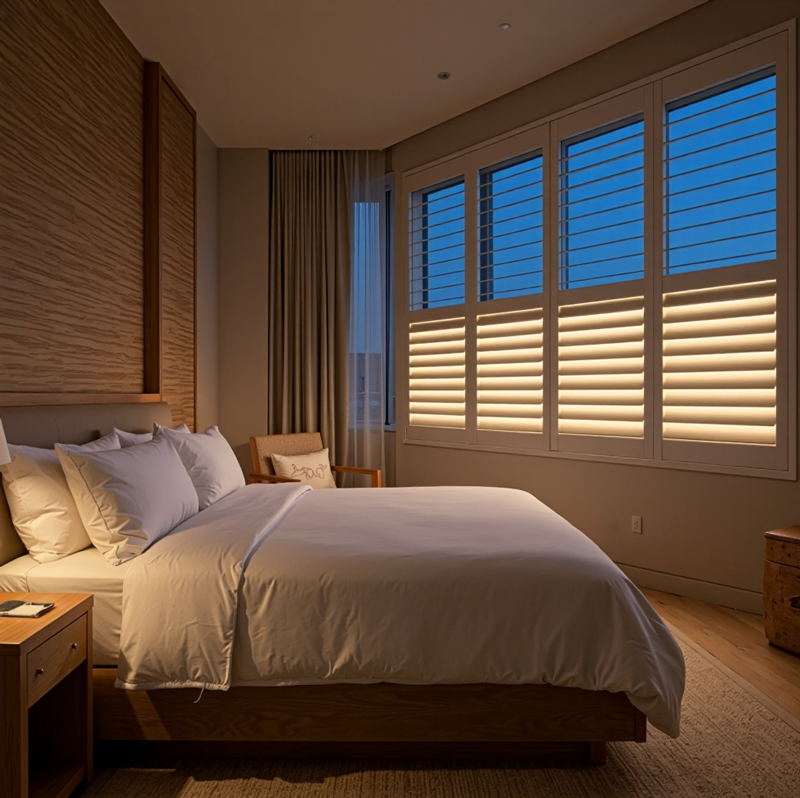
The guest opens the door to a room that glows. No overhead fixture snaps on — the windows are already producing a soft, warm ambient layer. The room feels lived-in, welcoming, and immediately different from the corridor they just left. First impression: this room cares about how it feels.
Evening: the wind-down
The guest dims the room for the evening. The window light warms and drops to a low glow — amber, soft, shadowless. There is no lamp to switch off, no harsh bathroom spill. The room transitions from "hotel room" to "resting place" without the guest doing anything complicated. They feel relaxed. They attribute it to the hotel.
Morning: the gentle wake
The sunrise simulation begins thirty minutes before the alarm. Light rises gradually from the window — warm, widening, lateral. The guest wakes without the shock of an overhead switch. They feel rested. They remember the room as one of the best they've stayed in. They can't explain why.
At no point in this sequence did the guest interact with a fixture, a dimmer switch, or a control panel. The light was simply there — shaped around their experience, arriving from the architecture of the room itself.
The warm-layer gap
Most hotel room lighting plans include three layers: overhead ambient (recessed downlights), task (bedside and desk lamps), and accent (artwork or architectural coves). What's consistently missing is a dedicated warm ambient layer at the wall plane — the layer that creates the feeling of warmth, enclosure, and restfulness that guests associate with premium hospitality.
Some luxury properties achieve this with cove lighting or backlit wall panels. But these solutions require significant construction coordination, dedicated millwork, and maintenance access. LiteLüvr delivers the same quality of warm, diffused, wall-plane illumination through the window covering — an element the room already requires for privacy and light control.
The hospitality ROI
A guest who sleeps well and wakes gently is a guest who rates the hotel higher, books again, and recommends the property. The warm ambient layer doesn't appear on the room rate or the fixture schedule — it appears in the satisfaction score. For hospitality designers, that's the most valuable lighting dollar in the plan: the one the guest never notices but always feels.
Room-by-room specification map
For designers considering LiteLüvr in a hospitality context, the application map looks like this:
Guest Suites
Warm ambient layer + sunrise/sunset simulation. The primary application. Every window becomes a circadian-friendly light source.
Spa & Wellness
Ultra-low brightness, deep warm tone. Super-diffused light supports the calm, restorative atmosphere that spa environments demand.
Corridors
Consistent wall-plane illumination replaces the overhead downlight grid. Hallways feel warmer, wider, and more inviting.
Lobby Lounges
Evening ambiance without floor lamps or table lamp clutter. Clean furniture plans. Architectural light.
Meeting Rooms
Adjustable brightness from the window wall. Softens the room for presentations. Brightens for working sessions. One surface, two modes.
Dining & Bar
Warm, low ambient glow from the perimeter. Tables feel intimate. The room feels expansive. No competing light sources on the tabletops.
The specification conversation
If you're working on a boutique hotel, a resort, or a luxury renovation, the warm ambient layer is the gap worth closing. LiteLüvr doesn't replace the rest of the lighting plan — it fills the layer that's been missing: architectural, circadian-friendly, warm wall-plane illumination that arrives from an element the room already needs.
The guest doesn't see the technology. The guest feels the room. And the room feels like the kind of place they want to come back to.
LiteLüvr® is a window-integrated lighting system by Radiant Blinds, LLC. To discuss a hospitality application or see the light in a residential setting, request a showing.